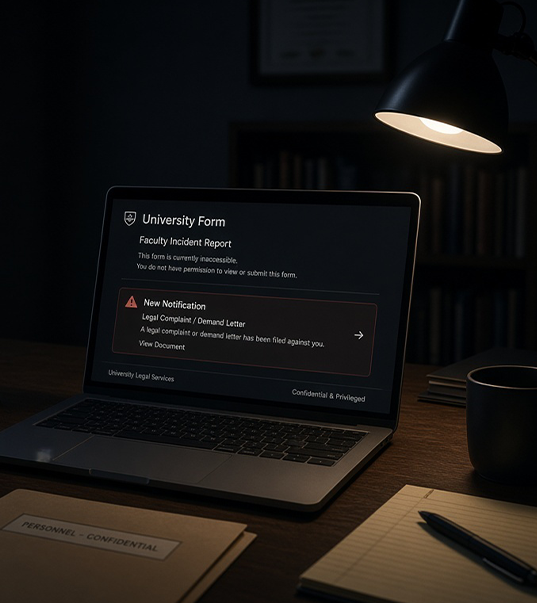
Blind Spots
Automated scans come back clean, but real students using screen readers still can't complete enrollment forms

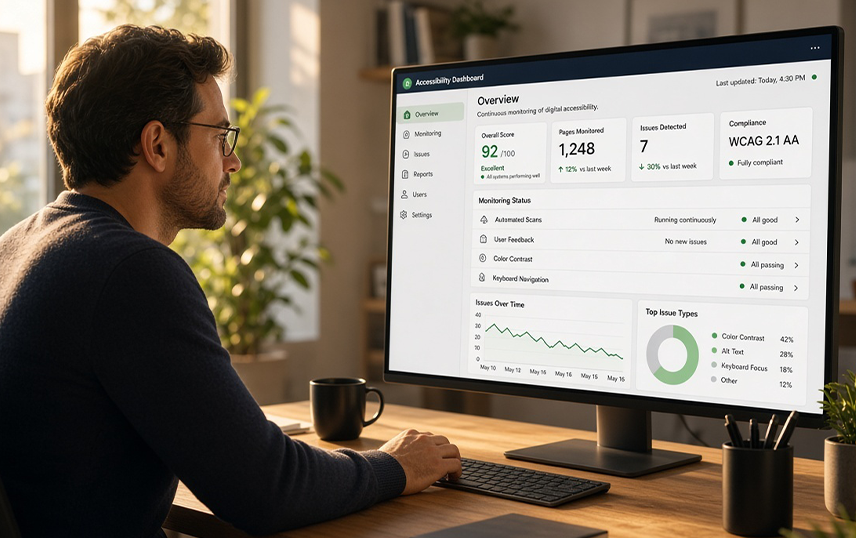
An automated scan will catch some accessibility issues. It won't catch all of them, and it definitely can't tell you whether someone using a screen reader can actually finish your enrollment form. That's exactly where institutions get caught off guard, they ran a free scanner, it came back mostly clean, and they figured that meant compliant. Automated scanners are built to catch what's easy to catch — missing alt tags, contrast ratios, broken heading structures. They can't sit down and try to register for classes using only a keyboard, or navigate your financial aid PDF with a screen reader turned on. That gap between "the scan passed" and "a student can actually use this" is where most institutions end up exposed without realizing it.
Our audits combine automated scanning with real manual testing, actual keyboard navigation, actual screen reader testing, actual review of color contrast and form labels. What you get back reflects how a real person with a disability actually experiences your site. Then we fix what we find, and we prioritize it, the pages students actually use to apply, register, and get help go first.
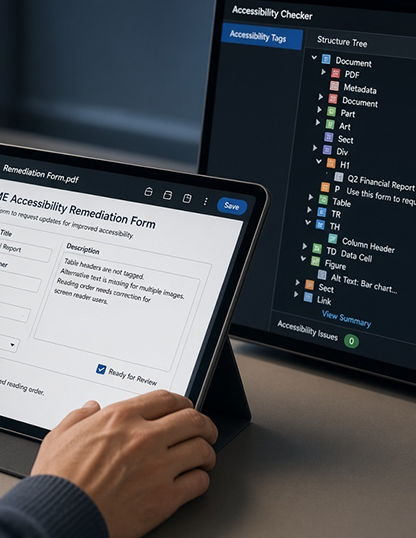
Most institutions find out about their accessibility gaps the hard way, a complaint, a demand letter, a student who couldn't finish financial aid paperwork because the form wasn't labeled for a screen reader. By that point it's a legal and reputational problem, not just a technical one. An audit before that happens costs a fraction of what remediation under legal pressure does, and either way, you walk away with a documented paper trail showing good-faith progress.
Every accessibility engagement starts from a different starting point — some institutions have never run an audit, others are already mid-remediation under a settlement timeline. Strip away the specifics, though, and here's what stays consistent across every engagement: