Overlay Band-Aids
Websites running accessibility overlay widgets that mask problems instead of fixing the underlying code and structure

Here's where things actually stand. The DOJ's ADA Title II rule requires public colleges and universities to hit WCAG 2.1 Level AA, on both websites and mobile apps. The original April 2026 deadline got pushed back a year, large public institutions now have until April 26, 2027, smaller ones until April 26, 2028. That's runway, not relief, the standard itself didn't change. And private institutions aren't off the hook either, Title III and Section 504 still apply, deadline or no deadline. A lot of what gets sold in this space is a JavaScript widget you drop on top of your existing site, and it claims to fix accessibility automatically. It doesn't touch the underlying code. And it doesn't hold up under real scrutiny either, one of the big overlay vendors actually got fined a million dollars by the FTC in 2025 for claiming exactly that. We do this differently.
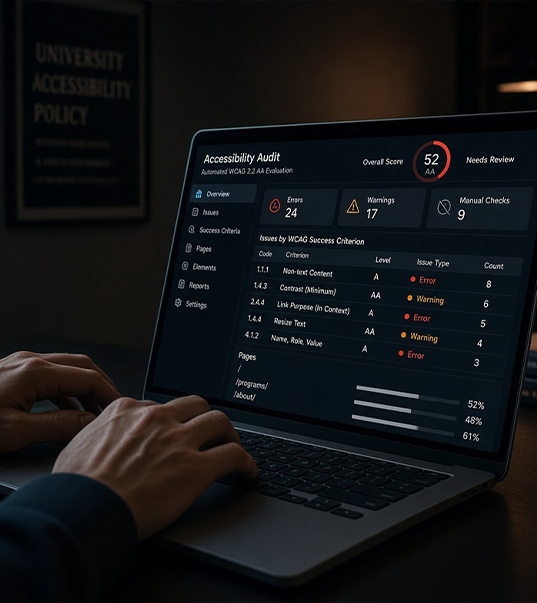
We work on the actual code, content, and structure of your site, so when someone using a screen reader tries to register for classes, it genuinely works. Not just passes an automated scan.


The most common mistake isn't ignoring accessibility, it's installing a widget and calling it done. That doesn't survive a DOJ complaint, a student lawsuit, or an actual person trying to navigate your registration system with a screen reader. We build compliance as an ongoing program, audit, fix, document, train, monitor, not a one-time purchase that checks a box.
Accessibility compliance isn't a one-time audit you check off and forget — it's a standard that has to hold up across every page, portal, and update you push after launch. Strip away the specifics, though, and here's what stays consistent across every engagement: