1EdgeIT

Moving Systems Without
Moving Backwards

Whether you're migrating off a legacy ERP or connecting the systems you already have, the risk is the same:
losing data, breaking a process nobody documented, or disrupting a registration cycle.

More Than a Technology Problem

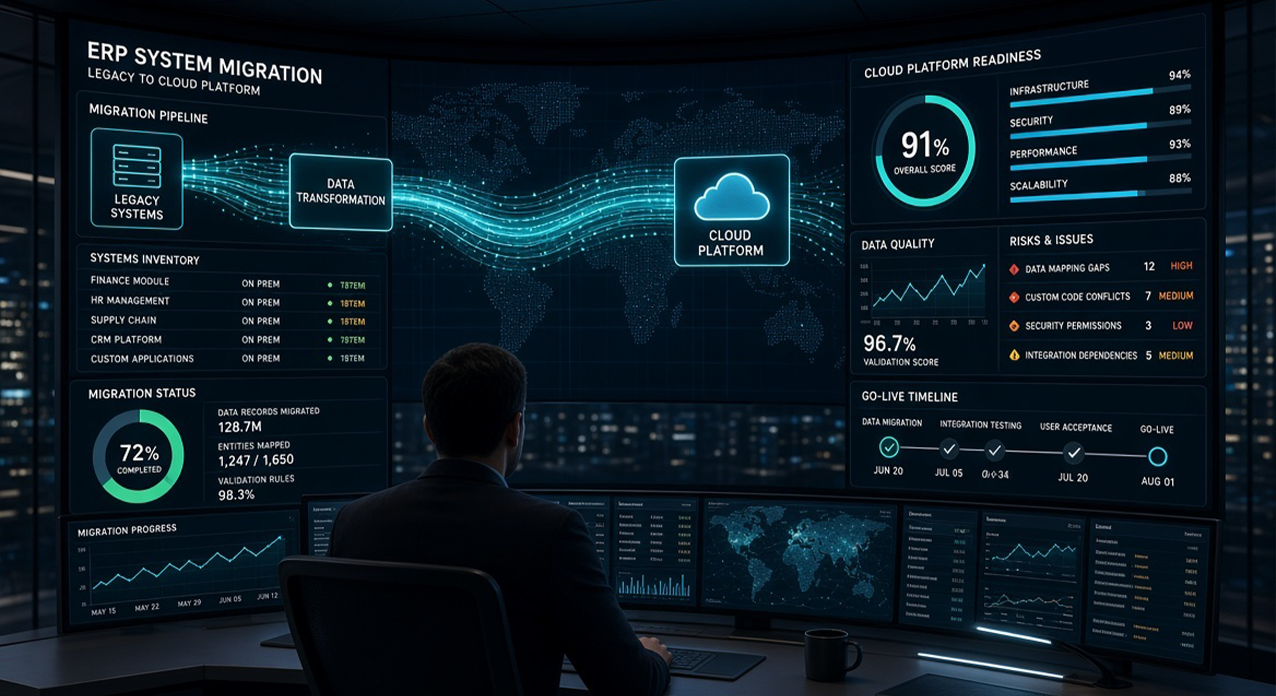
Every ERP migration story in higher ed involves the same fear: what happens to twenty years of student records, financial aid history, and custom workflows when you move to a new platform. It's not really a technology question. It's an institutional memory question. We treat it that way. That's why every migration starts with a full inventory of what actually needs to move, not just what fits neatly into the new platform. Custom workflows built by someone who left years ago, one-off reports finance depends on, integrations nobody ever documented — we find them before they become the thing that breaks in week two of a new semester.

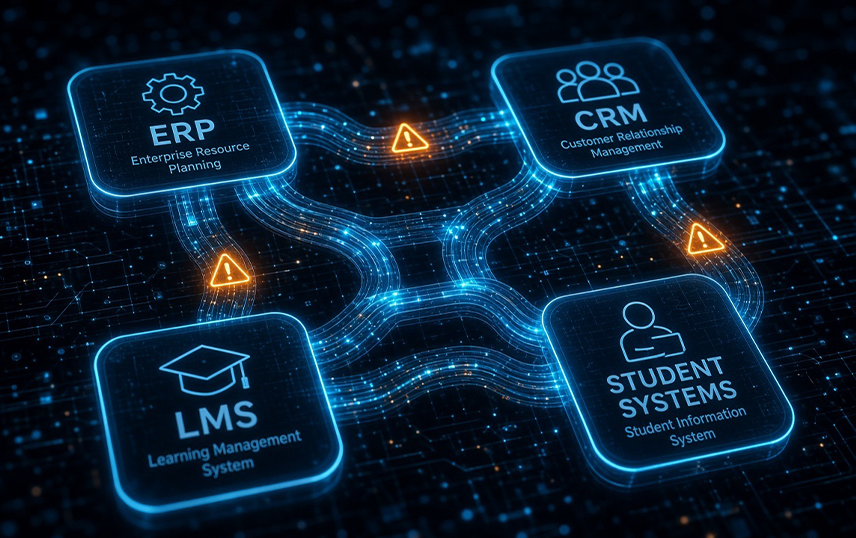
On the integration side, most institutions aren't trying to replace their ERP, they're trying to get it to actually talk to the other five systems running their campus: the CRM, the LMS, the portal, state reporting tools, and whatever financial aid or advancement platform sits alongside the SIS.

Your Calendar Comes First

The most common migration failure we see isn't technical. It's a go-live date set by a vendor's project timeline instead of the institution's academic calendar: a cutover scheduled two weeks before fall registration opens. We build migration plans around your institution's calendar first, technology timeline second.

How We Start

Before anything moves, we spend time mapping what you actually have: every customization, every workaround, every integration nobody wrote down. That assessment becomes the plan, not a generic template applied to your institution. It tells us what's safe to leave alone, what needs to move carefully, and where the real risk sits.

  • Discovery and readiness assessment before any migration timeline is set
  • Full ERP-to-ERP migrations (e.g., legacy Banner or Colleague to Workday)
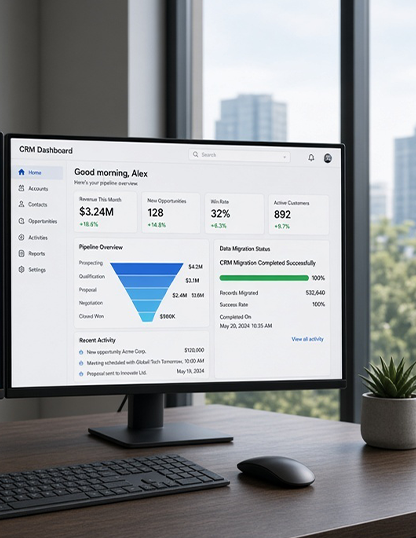
  • Data migration and validation: records, historical transcripts, financial aid history
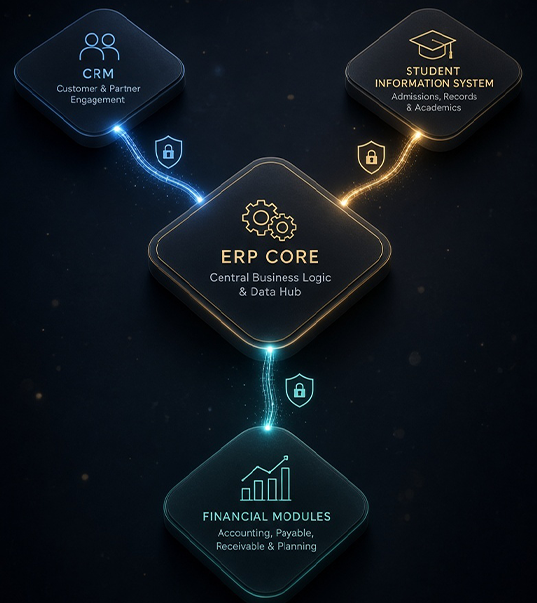
  • API and middleware integration between SIS, CRM, LMS, and third-party tools
  • Legacy system decommissioning done in a way that preserves audit and compliance requirements
What's included service?
  • - A documented discovery phase before any commitments are made on timeline or scope
  • - Migration plans built around your academic calendar, not a vendor's fiscal quarter
  • - Data validation processes that catch problems before go-live, not after
  • - Integration architecture that reduces manual data entry across departments instead of adding another disconnected system
Let’s Connect
The Solution
Common Pain Points We Solve

Data Loss Risk

Twenty years of student records, financial aid history, and workflows preserved through every migration phase
01 /05

Disconnected Systems

CRM, LMS, student portal, and reporting tools that were never built to talk to each other

02 /05

Rushed Timelines

Go-live dates set by vendor schedules instead of your institution's actual academic calendar and staffing capacity

03 /05

Undocumented Workflows

Custom configurations and workarounds built over years that nobody wrote down before key staff left

04 /05

Post-Migration Gaps

Reports and integrations that worked fine in testing but break once real enrollment data hits them

05 /05
FAQs
Frequently Asked
Questions
Usually, yes — it's a handful of specific data handoffs, not a full architecture failure.
Very, if timed badly. We build the calendar around your institution's calendar, not the reverse.
No — we're not resellers, so the recommendation follows your data, not our incentives.
Data integrity at cutover. We build in a longer validation window than most firms bother with.
Migrating or integrating, we'll tell you honestly what the timeline should look like.


Get Started
Contact
Let’s Build
Intelligent Things
E-mail address
Contact@1edgeit.com
Phone number
+1 (647) 555 0172

    Fill this form below